Electric
Bidirectional charging (V2H/V2G) in Switzerland
Bidirectional charging turns your electric car into a rolling power store. We explain how vehicle-to-home (V2H) and vehicle-to-grid (V2G) work, which cars are compatible and what is already possible in Switzerland today.
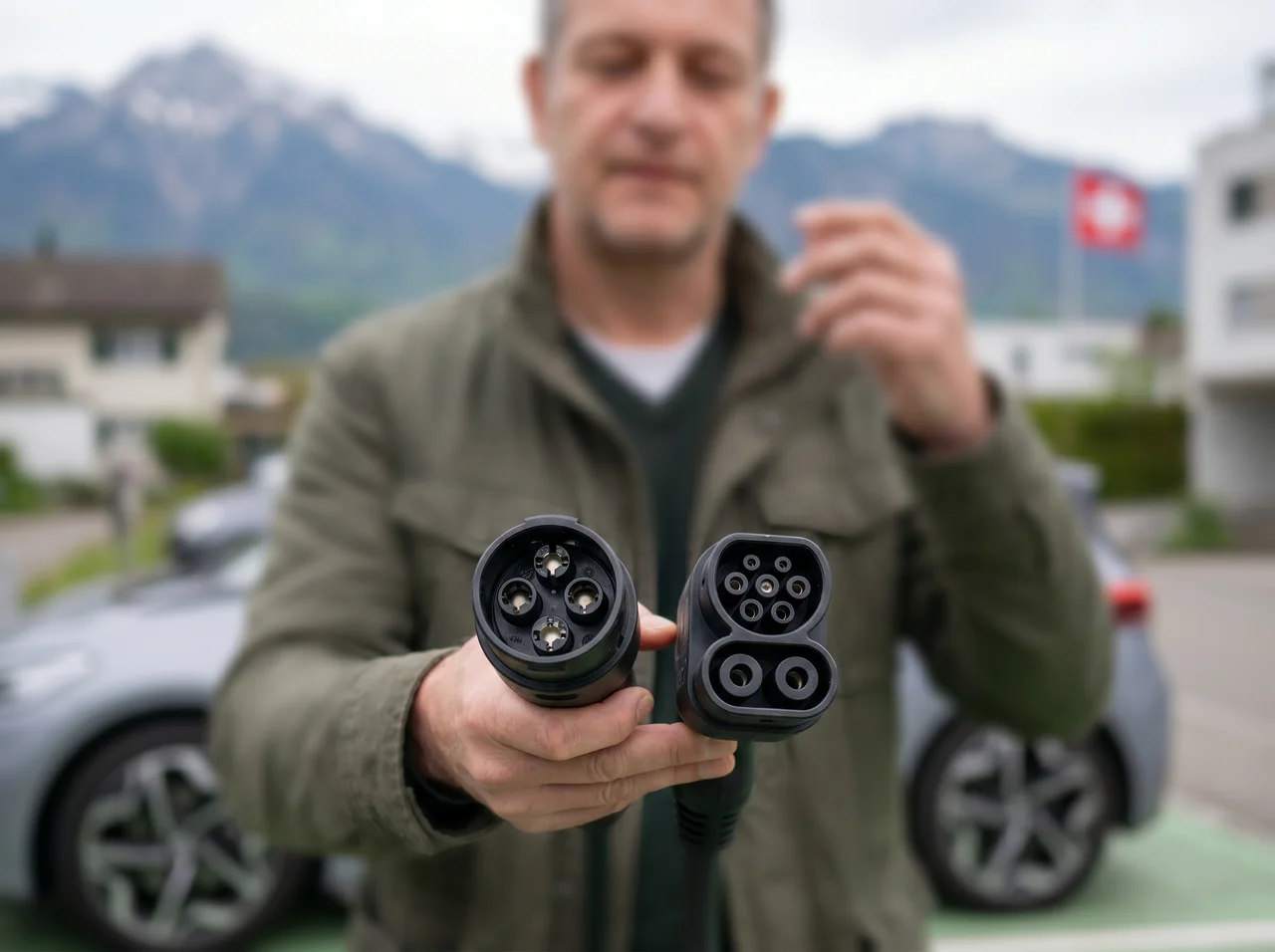
How does bidirectional charging work?
A conventional electric car draws power from the grid and stores it in the battery. Bidirectional charging opens the opposite direction: the battery can give power back — either to your own house (V2H) or to the public grid (V2G).
That makes the car the biggest battery store most households own. An average electric car holds 50 to 80 kWh — more than ten times what a conventional home battery stores.
What is vehicle-to-home (V2H)?
With V2H the car battery serves as a buffer store for your own home. That is particularly interesting in combination with a photovoltaic system: during the day the solar panels charge the car, in the evening the car supplies the household.
- Backup power: In a blackout the car keeps the household running for hours, sometimes days.
- Solar optimisation: Your own solar power is stored instead of being fed into the grid.
- Lower electricity costs: Draw on the car battery during peak-tariff hours.
What is vehicle-to-grid (V2G)?
V2G goes a step further: the car feeds power straight into the public grid. That helps to even out the swings in renewable production. When there is plenty of wind or solar power in the grid, thousands of cars charge. When it runs short, they give power back.
In Switzerland V2G is still in the pilot phase. The technical infrastructure and the regulatory framework are currently being developed.
Which electric cars support bidirectional charging?
| Make / model | V2H | V2G | Note |
|---|---|---|---|
| Nissan Leaf (from 2013) | Yes | Yes | Pioneer, via CHAdeMO |
| Mitsubishi Outlander PHEV | Yes | Partly | Limited output |
| Ford F-150 Lightning | Yes | No | Officially US market only |
| VW ID. Buzz (planned) | Yes | In development | Via CCS in future |
| Tesla (all models) | In development | In development | Not yet available |
Is bidirectional charging worth it in Switzerland?
For households with a photovoltaic system and a wallbox, V2H is already attractive today. Self-consumption of solar power rises noticeably, and in a blackout you have a powerful backup supply. V2G will get interesting over the coming years, once the regulatory hurdles fall and grid operators can use electric cars as storage.
Bidirectional charging at FlexiMoto
FlexiMoto also lists electric cars that support bidirectional charging. Just set the filters in the vehicle search or ask our team which models are compatible. We are happy to advise you on the right wallbox and the technical requirements.
Frequently asked questions
What is bidirectional charging (V2H/V2G)?
Bidirectional charging means the electric car does not only draw power from the grid but can also give it back. Vehicle-to-home (V2H) supplies your own house with electricity, vehicle-to-grid (V2G) feeds surplus power into the public grid.
Does bidirectional charging work in Switzerland?
In principle, yes. It does need special hardware, though: a bidirectional charger (wallbox) and an electric car that supports the technology. In Switzerland V2H is already available from a few providers, V2G is still limited to pilot projects.
Which electric cars support bidirectional charging?
The Nissan Leaf (V2H/V2G), the Mitsubishi Outlander PHEV, the Honda e and a few models from Ford and Volkswagen support bidirectional charging. Tesla and many other manufacturers are working on the technology, but not every model is compatible yet.
Related guides
- Electric car consumption – What do 100 km on electricity cost?
- Tax breaks for electric cars – Tax savings canton by canton.
- Electric cars in the marketplace – EVs and hybrids at FlexiMoto.